by Laura Brekke
Let us suppose that James Bond is the Church. Not a church, but the Church. And not the book Bond, but the EON films Bond. This British special agent is the capital ‘C’ Church. It’s a reasonable proposition.
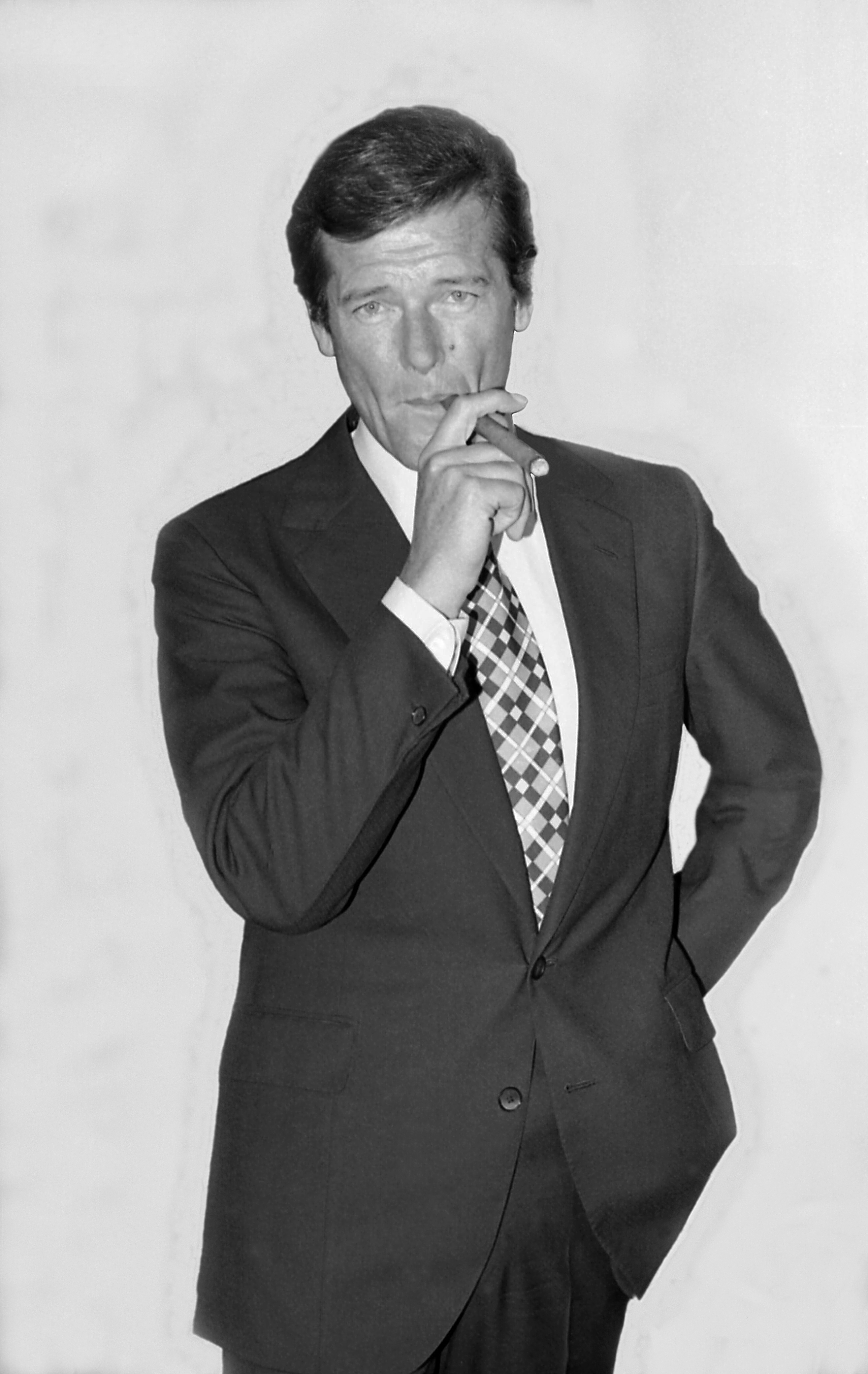
James Bond has been the same secret service agent we have loved and followed across 23 films1 who first busted bad guys and broke hearts in 1962. But in the last 52 years, Bond has been played by 6 different actors (not counting any of the spin-offs, radio shows and other assorted non-canonical media). While we affirm that each new Bond is uniquely himself, there remains a continuity of character that binds them together. They’re one, but also many. Each has his own style and flavor of being 007 (like Sean Connery’s signature accent, or Roger Moore’s ironic eyebrow raise). Each has his own villains to depose, his own beautiful women to disrobe, and his own nifty gadgets with which to disarm or dismember the unwary rapscallion. Despite the unique qualities each actor brings to Bond, the man and the myth are the same, intertwined, inseparable.
 James Bond is the Church. The Church is marked by the unbroken succession of leaders and reformers, picking up doctrine, spinning and stretching the practice, making the tradition its own. Reformers face their own Jaws and Dr No - so-called enemies who stood on the wrong side of doctrine. There have been innovations, like re-translation of the ancient texts in the language of the average reader by Luther and Erasmus. Each new expression picks up the mythos, the history of what it means to be the Church and embodies it in its own distinctive way. There are high-liturgy Byzantine Catholic churches with icons and incense, and no-liturgy Quakers with Spirit-filled silence. There are shouting Pentecostals, and contemplative Trappist monks. There are German Catholics, and Palestinian Lutherans, and Italian Methodists. Each of these expressions brings their unique flavor into the single, universal body of Christ. Diverse but the same. Linked by continuity. Just like James Bond2.
James Bond is the Church. No matter how much you love Sean Connery or Pierce Bronson, Bond isn’t defined by a single actor, just as the Church is not defined by a single theologian, practice, or liturgical style. Just as 007 is reinvented to meet the changing landscape of international counter-terrorism, the Church grows and shifts to be present to the changing, ever-expanding body of Christ. And, just like James Bond is linked in continuity by a familiar cast of characters – like M, Q, and Ms. Moneypenny – so too is the Church bound together with each historical expression of faith in Christ and baptism into his universal body.
James Bond is the Church. The Church is marked by the unbroken succession of leaders and reformers, picking up doctrine, spinning and stretching the practice, making the tradition its own. Reformers face their own Jaws and Dr No - so-called enemies who stood on the wrong side of doctrine. There have been innovations, like re-translation of the ancient texts in the language of the average reader by Luther and Erasmus. Each new expression picks up the mythos, the history of what it means to be the Church and embodies it in its own distinctive way. There are high-liturgy Byzantine Catholic churches with icons and incense, and no-liturgy Quakers with Spirit-filled silence. There are shouting Pentecostals, and contemplative Trappist monks. There are German Catholics, and Palestinian Lutherans, and Italian Methodists. Each of these expressions brings their unique flavor into the single, universal body of Christ. Diverse but the same. Linked by continuity. Just like James Bond2.
James Bond is the Church. No matter how much you love Sean Connery or Pierce Bronson, Bond isn’t defined by a single actor, just as the Church is not defined by a single theologian, practice, or liturgical style. Just as 007 is reinvented to meet the changing landscape of international counter-terrorism, the Church grows and shifts to be present to the changing, ever-expanding body of Christ. And, just like James Bond is linked in continuity by a familiar cast of characters – like M, Q, and Ms. Moneypenny – so too is the Church bound together with each historical expression of faith in Christ and baptism into his universal body.
 Maybe George Lazenby wasn’t your favorite Bond, or the doctrine of Mary’s perpetual virginity makes you cringe. The thing about belonging to the on-going story of Bond and the Church is that you can pick up and put down the expressions which don’t speak to you. Perhaps the Daniel Craig Bond is too violent, but there is the sarcastic wit of the Roger Moore Bond. Perhaps the TULIP theology of strict Calvinism feels stifling and exclusivist, but there is the on-going work of sanctification in Wesley’s doctrine. You may hate one film, or one chapter in the long history of the Church, but there are other movies, adaptions, chapters.
The Church is Reformed and always reforming3. We aren’t an unchanging monolith, an ancient institution, withered but stolid after two millennia; instead, the Church is the regenerating, continuous community of the faithful changing as the community changes. Our own familiar cast of characters are found on the pages of Scripture – Mary Magadlene, Mary the mother of Jesus, Paul, Ruth, Abraham and Sarah, Isaiah, Noah – we are linked by the stories of God’s love for God’s people. And new characters emerge as the story continues – Augustine, Aquinas, Julian of Norwich, Teresa of Avilla, Martin Luther, John and Charles Wesley, Dietrich Bonhoeffer, Guillermo Gutierrez, James Cone, Maricella Althas Reed, John Cobb.
We Church leaders would do well to take a page from James Bond’s book. Not the kill-your-enemies-with-flashy-explosions-and-gratuitous-violence page, clearly, but the embrace-of-change-and-reinvention page. James Bond is iconic not because he is the same actor year after year and film after film; he is iconic because he is the same character portrayed by wildly different actors (Timothy Dalton and Daniel Craig, for example). The Church has already regenerated again and again; we should look to the ways we have Reformed in the past and embrace the coming reforms of the future, knowing that even as the actors – or prominent theologians – change, the heart is continuous.
Maybe George Lazenby wasn’t your favorite Bond, or the doctrine of Mary’s perpetual virginity makes you cringe. The thing about belonging to the on-going story of Bond and the Church is that you can pick up and put down the expressions which don’t speak to you. Perhaps the Daniel Craig Bond is too violent, but there is the sarcastic wit of the Roger Moore Bond. Perhaps the TULIP theology of strict Calvinism feels stifling and exclusivist, but there is the on-going work of sanctification in Wesley’s doctrine. You may hate one film, or one chapter in the long history of the Church, but there are other movies, adaptions, chapters.
The Church is Reformed and always reforming3. We aren’t an unchanging monolith, an ancient institution, withered but stolid after two millennia; instead, the Church is the regenerating, continuous community of the faithful changing as the community changes. Our own familiar cast of characters are found on the pages of Scripture – Mary Magadlene, Mary the mother of Jesus, Paul, Ruth, Abraham and Sarah, Isaiah, Noah – we are linked by the stories of God’s love for God’s people. And new characters emerge as the story continues – Augustine, Aquinas, Julian of Norwich, Teresa of Avilla, Martin Luther, John and Charles Wesley, Dietrich Bonhoeffer, Guillermo Gutierrez, James Cone, Maricella Althas Reed, John Cobb.
We Church leaders would do well to take a page from James Bond’s book. Not the kill-your-enemies-with-flashy-explosions-and-gratuitous-violence page, clearly, but the embrace-of-change-and-reinvention page. James Bond is iconic not because he is the same actor year after year and film after film; he is iconic because he is the same character portrayed by wildly different actors (Timothy Dalton and Daniel Craig, for example). The Church has already regenerated again and again; we should look to the ways we have Reformed in the past and embrace the coming reforms of the future, knowing that even as the actors – or prominent theologians – change, the heart is continuous.
1. 25 if you count the 1967 parody Casino Royale and the non-EON film Never Say Never Again.↩
2. The Doctor from Doctor Who is also an excellent example for diverse expression being part of the same body. However, since my last post was on DW, I figured should expand my pop culture universe.↩
3. Reformata semper reformanda – a rallying cry of the Reformation – stands for the doctrine of “The Church reformed and always reforming according to the Word of God and guided by the Holy Spirit.” This Presbyterian thinks it’s a pretty big deal.↩
Laura
Brekke is a woman of many names and many interests. When she is being a
grown up, she directs Religious Diversity as a Catholic university in
California. When she is being an academic, she ponders theological anthropology and popular culture. When she’s being a pastor, she writes a blog
musing about faith, spirituality, and our reluctance to be vulnerable.
And when she is just being herself, she proudly embraced her inner
Whovian fangirl.
You might also like:
by Lyndsey Graves
We believe in one God,
The Father, the Almighty,
Maker of heaven and earth,
Of all that is, seen and unseen.
“I think it would be terrible to have to lie in church like that.” A classmate shared an anecdote about a friend who wasn’t sure he could agree with everything in the Nicene Creed, and I felt confused. Does this guy really think that everyone in the room believes everything in the Nicene Creed?
We believe in one Lord, Jesus Christ,
The only Son of God,
Eternally begotten of the Father,
God from God, Light from Light,
True God from true God,
Begotten, not made,
Of one Being with the Father.
Through him all things were made.
For us and for our salvation
He came down from heaven:
By the power of the Holy Spirit
He became incarnate from the Virgin Mary,
And was made man.
For our sake he was crucified under Pontius Pilate;
He suffered death and was buried.
I, for one, am expecting a pretty mundane Holy Week; I’m not really feeling very holy. I’ve complained to everyone I know about my Lent fast, which I’m pretty sure is not its point, and besides that, I’m just too busy for Holy Week. I know you’re not supposed to say that, but I’m also too busy to guilt myself into fixing it or whatever, so it is what it is. Maybe this means I don’t really believe in Jesus; in fact, I’m pretty sure it does. I’m pretty sure if I believed, I’d do whatever it took to spend as much time as possible at least for this one week contemplating and celebrating these momentous events. But I’m probably not going to.
 Go ahead and whisper that maybe I’ve gotten a little lukewarm if you wish. I don’t think I have. I know what I’ve gotten, actually - I’ve gotten burned out. After moving across the country to work at a church and then going to seminary, I’m quite done playing Christian, completely over doing things because I’ve decided that I “should,” and especially sick of what “I believe.” Various ones of my beliefs have been deconstructed block by block; some have been demolished in an instant. Others are buried and mourned; pushed, pulled, shoved and yanked, all without actually budging; nudged and finessed and nuanced into crystalline precision; and over-defended to within an inch of their opponents’ lives. My beliefs have been treated as if they were of utmost importance in the name of “orthodoxy” and “critical thinking” and lots of things about “context” and “epistemology.”
On the third day he rose again
In accordance with the Scriptures;
He ascended into heaven
And is seated at the right hand of the Father.
Go ahead and whisper that maybe I’ve gotten a little lukewarm if you wish. I don’t think I have. I know what I’ve gotten, actually - I’ve gotten burned out. After moving across the country to work at a church and then going to seminary, I’m quite done playing Christian, completely over doing things because I’ve decided that I “should,” and especially sick of what “I believe.” Various ones of my beliefs have been deconstructed block by block; some have been demolished in an instant. Others are buried and mourned; pushed, pulled, shoved and yanked, all without actually budging; nudged and finessed and nuanced into crystalline precision; and over-defended to within an inch of their opponents’ lives. My beliefs have been treated as if they were of utmost importance in the name of “orthodoxy” and “critical thinking” and lots of things about “context” and “epistemology.”
On the third day he rose again
In accordance with the Scriptures;
He ascended into heaven
And is seated at the right hand of the Father.
He will come again in glory to judge the living and the dead,
And his kingdom will have no end.
I’m not going to say that beliefs aren’t important. Our beliefs, stated and unstated, do change our actions; our theologies do affect our relationships to God. But my beliefs aren’t nearly as important as some teachers and pastors and denominational officials make them out to be. As one of my housemates said, “Some days you decide that Jesus didn’t actually do any miracles or rise from the dead. And you go on living your life for a day or two, and then things are fine again.”
We’re told, “You are going to be A Religious Leader. You must determine What You Believe.” We wrinkle our foreheads and Critically Think. We start to align ourselves with certain writers or systems and against certain enemies. But it all rings a little bit false.
We believe in the Holy Spirit, the Lord, the giver of life,
Who proceeds from the Father and the Son.
With the Father and the Son he is worshiped and glorified.
He has spoken through the Prophets.
People sometimes believe things based on what they’ve decided intellectually. But mostly, they believe whatever everyone else believes, because that’s the thing that the culture treats as reality. I know lots of churches say their creed this way – Credo. I believe. But there’s rarely any such thing as, “I believe.” There is mostly just “We do. We assume. We expect. We disbelieve. We censor. We remember. We are.”
We believe.
What’s important is that we are reminding one another what, in our moments of greatest fidelity to tradition, underlies the things we do, assume, expect, disbelieve. I don’t have to believe all of it before I can proclaim to my community what we believe. Nor do I even have to say it before I can belong to that “We.”
We believe in one holy catholic and apostolic Church.
We acknowledge one baptism for the forgiveness of sins.
 For long months of the darkest night of my still-young soul, I went to church and did nothing but stand. I dragged myself in as the sun set and watched the songs go by, feeling as lonely as ever, with a sort of numb wish to think the songs were true. Some days I silently raged through others’ prayers, prayers they clearly felt so deeply - What does this have to do with me? I used to pray like that. But you just wait till God leaves you, and then we’ll see how you pray. And then I would stand for the creed, say only the words, “We believe,” and cry helpless tears through the list of the things I didn’t believe. And in the midst of it all, the people of Emmanuel Fellowship bore me through that dark night on the raft of their imperfectly-faithful words, the repetition of the creed.
We look for the resurrection of the dead,
And the life of the world to come.
Let Holy Week be for the doubter. Let Holy Week be for the lukewarm. Let Holy Week be for the burned-out, the sinner, the child, the angry, the bewildered, the bitter, the confused, and the liars. Say what you can; or say what someone else believes; or let the rest of us say it for you.
For long months of the darkest night of my still-young soul, I went to church and did nothing but stand. I dragged myself in as the sun set and watched the songs go by, feeling as lonely as ever, with a sort of numb wish to think the songs were true. Some days I silently raged through others’ prayers, prayers they clearly felt so deeply - What does this have to do with me? I used to pray like that. But you just wait till God leaves you, and then we’ll see how you pray. And then I would stand for the creed, say only the words, “We believe,” and cry helpless tears through the list of the things I didn’t believe. And in the midst of it all, the people of Emmanuel Fellowship bore me through that dark night on the raft of their imperfectly-faithful words, the repetition of the creed.
We look for the resurrection of the dead,
And the life of the world to come.
Let Holy Week be for the doubter. Let Holy Week be for the lukewarm. Let Holy Week be for the burned-out, the sinner, the child, the angry, the bewildered, the bitter, the confused, and the liars. Say what you can; or say what someone else believes; or let the rest of us say it for you.
This is what we believe.
This is what we hope.
Amen.
Lyndsey
lives in Boston, MA where she is pursuing her Master's in Theological
Studies at Boston University. She enjoys Community, Mad Men and Beauty
and the Beast and her spirit animal is a sloth. She would like to know
if this is some kind of interactive theater art piece. You can follow her on Twitter @lyndseygraves and you can find more of her writing at her blog To Be Honest.
You can follow On Pop Theology on Twitter @OnPopTheology or like us on Facebook at www.facebook.com/OnPopTheology. If you'd like to support what we do, you can donate via the button on the right of the screen.
Image Credits:
Image #1
Image #2
Image #3
You might also like:
by Hännah Ettinger
I grew up listening to four musicians.
Stephen Curtis Chapman, Out of the Grey, John Michael Talbot and Bob Bennett.
I mean, those are pretty okay bands, but that gets kinda boring after a while.
I did also listen to a lot of Hillary Hahn playing Bach, but that’s another story. It involves a LOT of pliés. So, anyway, four bands.
And then I went to college.
Everything changed. I met this guy named Napster and we had a violent love affair.
I caught up on music from the 90s in about two months and it was a mindfuck. A couple months later I listened to all of the U2 I could get my hands on. A friend played the Beatles for the entire course of an eight-hour road trip one way, and then on the way back we listened to three Rush albums. I joined my school’s chapel choir and we did Mozart, Fauré, Bach, Rutter. I got super into Katy Perry and Good Charlotte and Rutter’s Christmas carols. I introduced my younger brothers to honkytonk country music (because I’m an evil big sister like that). My sister (and roommate) and I listened to Wicked and Godspell on repeat all one summer and drove our parents insane with our round and round renditions of “Loathing” on bad days and “Day by Day” on good ones. I even had a phase where I was super, SUPER into French rock opera.
 My love of music has always been complicated.
These days, I can’t stand most worship music--partly because my family was always involved in worship team at church, so those songs bring back all the memories. But partly because it makes me feel panicked.
Worship services, in the church where I grew up—which was a cult, but looked like your average non-denominational church with a sort-of rock band to kick the service off—were sort of treated like performance displays, and it wasn’t just the band that worked to perfect the holy rock star pose. We were all expected to cultivate the same air and demeanor--during one service the pastor was talking about ways to worship with appropriate expression (we were pretty charismatic), and he pointed out a couple individuals (by NAME) as examples to emulate—their posture and gestures were apparently the most sincere expressions of worship in the congregation.
Maybe this is why I found sanctuary in the Episcopal tradition. Worship isn’t a show, and the music is secondary. No one is looking at me to see if I’m raising my hands during the Doxology. No one’s looking at me, period.
But I still passionately love music--especially live music. I’m still a sucker for really awesome music videos, and I’ve branched out a lot from the four, white, Christian, acoustic bands I grew up listening to.
My love of music has always been complicated.
These days, I can’t stand most worship music--partly because my family was always involved in worship team at church, so those songs bring back all the memories. But partly because it makes me feel panicked.
Worship services, in the church where I grew up—which was a cult, but looked like your average non-denominational church with a sort-of rock band to kick the service off—were sort of treated like performance displays, and it wasn’t just the band that worked to perfect the holy rock star pose. We were all expected to cultivate the same air and demeanor--during one service the pastor was talking about ways to worship with appropriate expression (we were pretty charismatic), and he pointed out a couple individuals (by NAME) as examples to emulate—their posture and gestures were apparently the most sincere expressions of worship in the congregation.
Maybe this is why I found sanctuary in the Episcopal tradition. Worship isn’t a show, and the music is secondary. No one is looking at me to see if I’m raising my hands during the Doxology. No one’s looking at me, period.
But I still passionately love music--especially live music. I’m still a sucker for really awesome music videos, and I’ve branched out a lot from the four, white, Christian, acoustic bands I grew up listening to.
 My current favorites are loud, confident individuals who love themselves as they are--these are the folks I listen to late at night on my way home from work, with the windows down and the night sea air hitting my face as I drive down the highway.
I heard a sermon once where the pastor talked about the music you listen to being a reflection of the company you want to keep. I hated the sermon because it was filled with legalism, but on that point, maybe he’s right. These are the people I want to be friends with, the people whose confidence and joy I want to be possessed by.
I’m not sure what music will mean for me in the future. I’m not sure if I’ll ever learn to play an instrument without having a panic attack from daddy issues.
But I’ll definitely throw a fantastic dance party in my kitchen with these good folks any night of the week.
Hännah's Dance Playlist
Janelle Monae - Dance Apocalyptic
Laura Mvula - That's Alright
Mika - Elle Me Dit
Stromae - Papaoutai
Beyonce feat. Chimamanda Ngozi Adiche - Flawless
Hännah Ettinger lives in Los Angeles. She writes and works as a bookseller, and has an opinionated orange cat. You can read more of her work at her blog Wine & Marble and you can
follow her on Twitter @haettinger.
My current favorites are loud, confident individuals who love themselves as they are--these are the folks I listen to late at night on my way home from work, with the windows down and the night sea air hitting my face as I drive down the highway.
I heard a sermon once where the pastor talked about the music you listen to being a reflection of the company you want to keep. I hated the sermon because it was filled with legalism, but on that point, maybe he’s right. These are the people I want to be friends with, the people whose confidence and joy I want to be possessed by.
I’m not sure what music will mean for me in the future. I’m not sure if I’ll ever learn to play an instrument without having a panic attack from daddy issues.
But I’ll definitely throw a fantastic dance party in my kitchen with these good folks any night of the week.
Hännah's Dance Playlist
Janelle Monae - Dance Apocalyptic
Laura Mvula - That's Alright
Mika - Elle Me Dit
Stromae - Papaoutai
Beyonce feat. Chimamanda Ngozi Adiche - Flawless
Hännah Ettinger lives in Los Angeles. She writes and works as a bookseller, and has an opinionated orange cat. You can read more of her work at her blog Wine & Marble and you can
follow her on Twitter @haettinger.
by Carly Gelsinger
The children of an evangelical megachurch are given pictures of their pastor to color with crayons, a picture demanding their loyalty to him as their fearless, visionary leader. An outcry on Twitter ensues. On the heels of the controversy, we also find out that the spontaneous mass baptisms that he is renowned for performing are not so spontaneous after all, and we go nuts over that too.
A few days later, the same pastor stands in front of thousands of his followers and shouts, to uproarious applause, that God gave him permission to squash his critics, because they are out to destroy the good work of the Lord.
"I felt God said 'Then don't play defense, play offense,’” he said to his church. “‘Shake it back off into the same fire. Feed the fire.’”
Soon after, news leaks that another megachurch pastor spent $200,000 of his church’s funds in an elaborate scheme to get his book on the New York Times’ bestseller list; this, after he faced accusations of plagiarism late last year. It sends his critics into a frenzy.
These latest developments about Steven Furtick and Mark Driscoll sickened many of us and, once again, ignited a familiar conversation about ego, control, and abuse of power within the church. And I’m not even going to touch Bill Gothard here, although his is unquestionably the most egregious case among the pastors in the news right now.
And perhaps you’re enraged; you’re ready to take on the seeming trend of pastors beholden to ego. Or, perhaps you’re no longer surprised by this sort of behavior; you’ve learned to expect such things. Maybe you’re just sick of hearing about it all.
Personally, I am utterly over stimulated with these kinds of stories. There are just too many, one after another, all of the time. I’m bracing myself for the next one, wondering what it will be. Furtick was forgotten in the wake of Driscoll, but next week Driscoll (at least, this latest controversy) will be forgotten as another powerful church leader makes news, and we’ll be left to palm our foreheads one more time.
Driscoll and Furtick are volatile, rich, famous and inflammatory. Which makes them easy targets for Twitter scorn and angry blog posts.
But the problem isn’t Driscoll’s loose mouth and penchant for fame, or Furtick’s secret salary and 16,000 square foot house. The problem lies in the systematic issues and structure of the modern church that creates, shapes and nurtures a specific sort of leader.
 It is only the famous or the egregious who rise to the scrutiny of the public eye. Nevertheless, there are leaders of smaller churches across the country who abuse the power allotted to them. I experienced it in a church of 150, where the pastor, when he thought none of his flock could hear him, referred to his parishioners as ‘giving units’. I experienced it in a small-town church of 50, where the pastor would pause in the middle of his two-hour sermon should anyone try to slip out quietly and he would publicly shame them. I’ve seen in in a church of 300, where the leader took it upon himself to pass out anti-gay marriage lawn signs to all of his members with instructions to display them outside their homes.
Not all pastors fit this mold, but it certainly exists and tragically, it’s not that hard to find those who do. There is an observable phenomenon here that has to do both with the pastors and with the churches that raise them up.
Dale Wolery, Executive President of Clergy Recovery Network – an organization that provides counseling for church leaders in crisis - says that often, pastors mask selfish ambition, and the result is dangerous for both the congregants and the pastor as well.
Perhaps because a pastor’s line of work is sacred, they feel compelled to deny, even to themselves, any selfish motivation, attempting to interpret it as God’s call and their vision. And perhaps we prefer to be complicit in that. Perhaps, at times, we even demand such pretense.
Wolery says the very structure of a congregation that regularly sits and listens to “expert” biblical teaching from one man can feed the natural human ego of the pastor, and give congregants the sense that their leader is spiritually above them. It is a system that works to puff up even humble people.
“The primary danger of putting pastors on pedestals is that the pastors become isolated there. Pedestals make human doings out of human beings by isolating them from peer friendships and human intimacy for which we are all designed,” Wolery says. “The pedestal of ministry, especially ‘successful’ ministry allows the dysfunction to thrive on the pedestal until a crisis occurs.”
The crisis (whether moral failing or financial scandal) is often the only way an unhealthy church leadership structure will be laid bare. Often, only then does a church begin to see the troubling aspects of the system in which they have been complicit.
It is only the famous or the egregious who rise to the scrutiny of the public eye. Nevertheless, there are leaders of smaller churches across the country who abuse the power allotted to them. I experienced it in a church of 150, where the pastor, when he thought none of his flock could hear him, referred to his parishioners as ‘giving units’. I experienced it in a small-town church of 50, where the pastor would pause in the middle of his two-hour sermon should anyone try to slip out quietly and he would publicly shame them. I’ve seen in in a church of 300, where the leader took it upon himself to pass out anti-gay marriage lawn signs to all of his members with instructions to display them outside their homes.
Not all pastors fit this mold, but it certainly exists and tragically, it’s not that hard to find those who do. There is an observable phenomenon here that has to do both with the pastors and with the churches that raise them up.
Dale Wolery, Executive President of Clergy Recovery Network – an organization that provides counseling for church leaders in crisis - says that often, pastors mask selfish ambition, and the result is dangerous for both the congregants and the pastor as well.
Perhaps because a pastor’s line of work is sacred, they feel compelled to deny, even to themselves, any selfish motivation, attempting to interpret it as God’s call and their vision. And perhaps we prefer to be complicit in that. Perhaps, at times, we even demand such pretense.
Wolery says the very structure of a congregation that regularly sits and listens to “expert” biblical teaching from one man can feed the natural human ego of the pastor, and give congregants the sense that their leader is spiritually above them. It is a system that works to puff up even humble people.
“The primary danger of putting pastors on pedestals is that the pastors become isolated there. Pedestals make human doings out of human beings by isolating them from peer friendships and human intimacy for which we are all designed,” Wolery says. “The pedestal of ministry, especially ‘successful’ ministry allows the dysfunction to thrive on the pedestal until a crisis occurs.”
The crisis (whether moral failing or financial scandal) is often the only way an unhealthy church leadership structure will be laid bare. Often, only then does a church begin to see the troubling aspects of the system in which they have been complicit.
 It’s easy to throw an angry tweet in some megachurch pastor’s direction, especially the ones I dislike. But what good will I accomplish in that? The much harder, humble work lies in refusing to put our real spiritual leaders – even the ones we really like – up on that pedestal in the first place.
We can help protect them from the temptations of ego by treating them, not like some higher form of spiritual being, but like a person with needs, desires, motives and flaws. We can bridge the divide between clergy and laity, not to invalidate their position, but to offer what all humans need – relationship and understanding.
We can support them when they make mistakes. We can choose no longer to demand perfection.
We can practice the kind of unity that doesn’t involve doing everything they say.
And we can truly encourage them in their faith by no longer expecting them to be the gatekeepers of ours.
Carly Gelsinger is writer, blogger, and mother
living in California. She is also a recovering Pentecostal and reluctant evangelical and writes about the messes in life that are worth making. You can
follow her on Twitter @CarlyGelsinger and find more of her writing at her website.
You might also like:
It’s easy to throw an angry tweet in some megachurch pastor’s direction, especially the ones I dislike. But what good will I accomplish in that? The much harder, humble work lies in refusing to put our real spiritual leaders – even the ones we really like – up on that pedestal in the first place.
We can help protect them from the temptations of ego by treating them, not like some higher form of spiritual being, but like a person with needs, desires, motives and flaws. We can bridge the divide between clergy and laity, not to invalidate their position, but to offer what all humans need – relationship and understanding.
We can support them when they make mistakes. We can choose no longer to demand perfection.
We can practice the kind of unity that doesn’t involve doing everything they say.
And we can truly encourage them in their faith by no longer expecting them to be the gatekeepers of ours.
Carly Gelsinger is writer, blogger, and mother
living in California. She is also a recovering Pentecostal and reluctant evangelical and writes about the messes in life that are worth making. You can
follow her on Twitter @CarlyGelsinger and find more of her writing at her website.
You might also like:
by Ben Howard
Come as you are/As you were/As I want you to be
It’s meant to be inviting.
And I’m sure it’s well-intentioned. For all their sins, churches are certainly well-intentioned when they invite strangers to come and join them. It’s a kindness. They’ve found something that gives them comfort, and hope, and peace. It’s downright neighborly that they’d invite you to come in and find the same. And they don’t want you to feel uncomfortable, they want to be accepting and hospitable, they just want you to feel welcome. They just want you to come as you are.
It’s an innocuous phrase really. It’s one of those phrases that just rolls off the tongue, the kind of phrase that was already a catchphrase before anyone ever coined it. It’s the kind of phrase that means well.
But then you dig deeper; you start to think about it a bit more. You start to fill out a conversation that might include the words, “Come as you are.” And that phrase becomes a bit more menacing, a bit more passive-aggressive:
Come as you are…because we can handle it.
Come as you are…before it’s too late.
Even you can come as you are.
Come doused in mud/Soaked in bleach/As I want you to be
It’s not easy to walk into a church for the first time. There are the unfamiliar surroundings and the unfamiliar people. Depending on the situation, there are unfamiliar songs and unfamiliar rituals. You're in a rather powerless situation.
 And there are expectations; expectations about who you are and why you’re there, especially when you “come as you are.”
I remember the stereotype with which, when I was growing up, I subconsciously tagged each new person in church: They must be broken. They must have realized how broken they are. They must want something better.
They must want what we have.
It didn’t matter if they were wearing a nice suit, or a t-shirt. It didn’t matter if they came alone or with their smiling family, didn’t matter if they lived in a dingy apartment or a McMansion on the nice side of town. They all need what we had.
We had the good stuff, and they wanted in.
And that's a problem. That kind of invitational stance, that nod towards hospitality, is not only superior, but it comes laden with expectations. By telling the people of the church, the people who are supposed to be expressing love and acceptance, that the people they meet are both fragile and aspirational, it convinces the church that this is the moment to mold them and shape them and change them. It says that they’ve disposed of the old and that they want to embrace new life; your version of new life, to be precise.
And I swear that I don’t have a gun/No I don’t have a gun/No I don’t have a gun
A church should always strive to be welcoming. There is no doubt that hospitality is a wonderful thing and that it’s an essential virtue for a community to foster. But like humility it’s a soft and subtle virtue. It’s not an attribute you can claim. Instead, someone gifts you with their acknowledgement, they tell you if you’re being welcoming, you don’t tell them.
Of course, this makes it very difficult to authentically market yourself as a welcoming community.
When hospitality meets marketing it reads as smarm, and it comes across like the community in question has something to hide, something that would make the unbiased observer think they weren’t welcoming.
Perhaps the biggest hurdle for the “Come as you are” church, even more than the implied superiority and unstated expectations, is that it protests too much.
“Come as you are” makes me immediately wonder why someone would feel the need to reassure me. Is it dangerous that I should simply be myself when I cross the threshold of the church doors? Why are you telling me that it’s okay to be myself?
And there are expectations; expectations about who you are and why you’re there, especially when you “come as you are.”
I remember the stereotype with which, when I was growing up, I subconsciously tagged each new person in church: They must be broken. They must have realized how broken they are. They must want something better.
They must want what we have.
It didn’t matter if they were wearing a nice suit, or a t-shirt. It didn’t matter if they came alone or with their smiling family, didn’t matter if they lived in a dingy apartment or a McMansion on the nice side of town. They all need what we had.
We had the good stuff, and they wanted in.
And that's a problem. That kind of invitational stance, that nod towards hospitality, is not only superior, but it comes laden with expectations. By telling the people of the church, the people who are supposed to be expressing love and acceptance, that the people they meet are both fragile and aspirational, it convinces the church that this is the moment to mold them and shape them and change them. It says that they’ve disposed of the old and that they want to embrace new life; your version of new life, to be precise.
And I swear that I don’t have a gun/No I don’t have a gun/No I don’t have a gun
A church should always strive to be welcoming. There is no doubt that hospitality is a wonderful thing and that it’s an essential virtue for a community to foster. But like humility it’s a soft and subtle virtue. It’s not an attribute you can claim. Instead, someone gifts you with their acknowledgement, they tell you if you’re being welcoming, you don’t tell them.
Of course, this makes it very difficult to authentically market yourself as a welcoming community.
When hospitality meets marketing it reads as smarm, and it comes across like the community in question has something to hide, something that would make the unbiased observer think they weren’t welcoming.
Perhaps the biggest hurdle for the “Come as you are” church, even more than the implied superiority and unstated expectations, is that it protests too much.
“Come as you are” makes me immediately wonder why someone would feel the need to reassure me. Is it dangerous that I should simply be myself when I cross the threshold of the church doors? Why are you telling me that it’s okay to be myself?
 I don’t think there’s any true malice behind those words. If there was, I don’t think it would have become as universalized as it has. But it’s important to unpack the loaded nature of the seemingly innocuous things that we say. It’s vital to understand the implications and expectations we build into our simple, billboard worthy turns of phrase.
Even when it’s the kind of phrase that means well.
Ben
Howard is an accidental iconoclast and generally curious individual
living in Nashville, Tennessee. He is also the editor-in-chief of On Pop
Theology and an avid fan of waving at strangers for no reason. You can
follow him on Twitter @BenHoward87.
You might also like:
I don’t think there’s any true malice behind those words. If there was, I don’t think it would have become as universalized as it has. But it’s important to unpack the loaded nature of the seemingly innocuous things that we say. It’s vital to understand the implications and expectations we build into our simple, billboard worthy turns of phrase.
Even when it’s the kind of phrase that means well.
Ben
Howard is an accidental iconoclast and generally curious individual
living in Nashville, Tennessee. He is also the editor-in-chief of On Pop
Theology and an avid fan of waving at strangers for no reason. You can
follow him on Twitter @BenHoward87.
You might also like:
by Ben Howard
Last night I got to do one of those things that everyone loves to do. I introduced my friends to something I like.
Every Wednesday, like many others, I meet with a group of friends from the church I attend to have a bible study or a small group or whatever in-vogue church-y phrase you use to describe people getting together to talk about stuff.
Last night, our discussion centered around The West Wing episode "Two Cathedrals." If you're unfamiliar with the show, this episode centers around two elements: the funeral of President Bartlet's longtime friend and secretary Mrs. Landingham and President Bartlet's announcement that he has multiple sclerosis and his subsequent decision to run for re-election. It's a beautifully shot, beautifully written story and it regularly comes up in discussions about the best TV episodes ever.
Now, while I would love to keep waxing rhapsodic about The West Wing, that's not where I want to focus my attention today.
You see, I realized on my drive home that this was one of the first times I had shared an episode of The West Wing, a show I adore, with friends of mine who had never experienced it. And what do you do when you're sharing something you love with friends who haven't seen it? You spend most of your time looking around making sure they enjoy it; making sure they laugh at the jokes, feel the weight of the serious scenes, checking to see if it connects to them the same way it connects to you.
 And there are a few reasons for this little mid-viewing check-up. First, I just want to make sure they don't hate it. Somehow, I feel like my reputation, my taste, is on the line when I share something with my friends. I feel somehow responsible for their enjoyment. And that leads to the second reason: I want to make sure that not only do they not hate what I'm sharing, I hope they just straight-up like it.
I'm sure all of this sounds obvious, but here's the kicker. I feel like this is all so important because of what their enjoyment does for me.
When I share something, whether it's a TV show, or a song, or even just a quote from a book I'm reading, what I'm really doing is trying to reveal a piece of myself. And somehow, through the transitive property of things that touch the soul, their mutual engagement with that same show or song or line makes me feel more connected to them.
And there are a few reasons for this little mid-viewing check-up. First, I just want to make sure they don't hate it. Somehow, I feel like my reputation, my taste, is on the line when I share something with my friends. I feel somehow responsible for their enjoyment. And that leads to the second reason: I want to make sure that not only do they not hate what I'm sharing, I hope they just straight-up like it.
I'm sure all of this sounds obvious, but here's the kicker. I feel like this is all so important because of what their enjoyment does for me.
When I share something, whether it's a TV show, or a song, or even just a quote from a book I'm reading, what I'm really doing is trying to reveal a piece of myself. And somehow, through the transitive property of things that touch the soul, their mutual engagement with that same show or song or line makes me feel more connected to them.
I've noticed within myself a certain creativity when it comes to snark and criticism. I can joke and deconstruct with wit and style, but I can't do the same with beauty. When I try and say good things, hopeful things, beautiful things they come out trite and cliched and hackneyed. Somehow, my words and my methods of communication fail to elucidate the myriad complexity of a deeper, ineffable good that permeates existence.
And to bridge that gap, I need you to hear this song, I need you to read this phrase, I need you to watch this movie. I need you to feel what I feel so that I can know I'm not alone; so I can know what it feels like to be understood.
This is why I love church. It's especially why I love Advent, and Lent, and Ash Wednesday, and Holy Saturday. It's why I love taking communion with friends and strangers, holding candles, hearing a harp or an organ, and repeating the same words that my people, people I've never met, have said for centuries.
 I can't explain God to you, I can't unravel the mysteries of the universe, and my best attempts sound empty.
But I can share this moment that I love with you and we can watch The West Wing together. Because loving Jed Bartlet says something about me, something I want you to know, but something I can't quite say. It brings us closer, and that is good.
I can't explain God to you, I can't unravel the mysteries of the universe, and my best attempts sound empty.
But I can share this moment that I love with you and we can watch The West Wing together. Because loving Jed Bartlet says something about me, something I want you to know, but something I can't quite say. It brings us closer, and that is good.
Ben
Howard is an accidental iconoclast and generally curious individual
living in Nashville, Tennessee. He is also the editor-in-chief of On Pop
Theology and an avid fan of waving at strangers for no reason. You can
follow him on Twitter @BenHoward87.
You can follow On Pop Theology on Twitter @OnPopTheology or like us on Facebook at www.facebook.com/OnPopTheology.
You might also like: