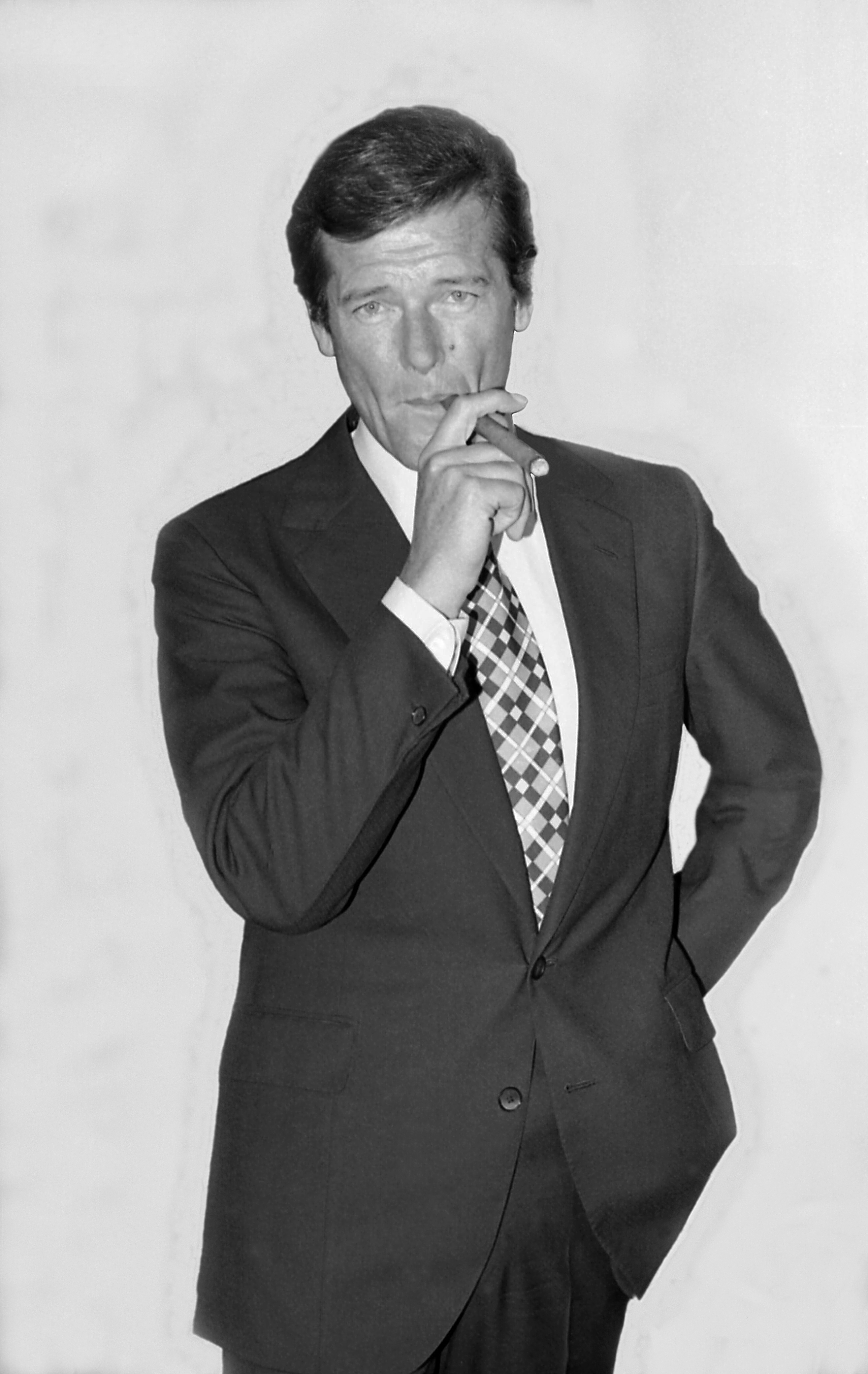
Let us suppose that James Bond is the Church. Not a church, but the Church. And not the book Bond, but the EON films Bond. This British special agent is the capital ‘C’ Church. It’s a reasonable proposition.
James Bond has been the same secret service agent we have loved and followed across 23 films1 who first busted bad guys and broke hearts in 1962. But in the last 52 years, Bond has been played by 6 different actors (not counting any of the spin-offs, radio shows and other assorted non-canonical media). While we affirm that each new Bond is uniquely himself, there remains a continuity of character that binds them together. They’re one, but also many. Each has his own style and flavor of being 007 (like Sean Connery’s signature accent, or Roger Moore’s ironic eyebrow raise). Each has his own villains to depose, his own beautiful women to disrobe, and his own nifty gadgets with which to disarm or dismember the unwary rapscallion. Despite the unique qualities each actor brings to Bond, the man and the myth are the same, intertwined, inseparable.
 James Bond is the Church. The Church is marked by the unbroken succession of leaders and reformers, picking up doctrine, spinning and stretching the practice, making the tradition its own. Reformers face their own Jaws and Dr No - so-called enemies who stood on the wrong side of doctrine. There have been innovations, like re-translation of the ancient texts in the language of the average reader by Luther and Erasmus. Each new expression picks up the mythos, the history of what it means to be the Church and embodies it in its own distinctive way. There are high-liturgy Byzantine Catholic churches with icons and incense, and no-liturgy Quakers with Spirit-filled silence. There are shouting Pentecostals, and contemplative Trappist monks. There are German Catholics, and Palestinian Lutherans, and Italian Methodists. Each of these expressions brings their unique flavor into the single, universal body of Christ. Diverse but the same. Linked by continuity. Just like James Bond2.
James Bond is the Church. No matter how much you love Sean Connery or Pierce Bronson, Bond isn’t defined by a single actor, just as the Church is not defined by a single theologian, practice, or liturgical style. Just as 007 is reinvented to meet the changing landscape of international counter-terrorism, the Church grows and shifts to be present to the changing, ever-expanding body of Christ. And, just like James Bond is linked in continuity by a familiar cast of characters – like M, Q, and Ms. Moneypenny – so too is the Church bound together with each historical expression of faith in Christ and baptism into his universal body.
 Maybe George Lazenby wasn’t your favorite Bond, or the doctrine of Mary’s perpetual virginity makes you cringe. The thing about belonging to the on-going story of Bond and the Church is that you can pick up and put down the expressions which don’t speak to you. Perhaps the Daniel Craig Bond is too violent, but there is the sarcastic wit of the Roger Moore Bond. Perhaps the TULIP theology of strict Calvinism feels stifling and exclusivist, but there is the on-going work of sanctification in Wesley’s doctrine. You may hate one film, or one chapter in the long history of the Church, but there are other movies, adaptions, chapters.
The Church is Reformed and always reforming3. We aren’t an unchanging monolith, an ancient institution, withered but stolid after two millennia; instead, the Church is the regenerating, continuous community of the faithful changing as the community changes. Our own familiar cast of characters are found on the pages of Scripture – Mary Magadlene, Mary the mother of Jesus, Paul, Ruth, Abraham and Sarah, Isaiah, Noah – we are linked by the stories of God’s love for God’s people. And new characters emerge as the story continues – Augustine, Aquinas, Julian of Norwich, Teresa of Avilla, Martin Luther, John and Charles Wesley, Dietrich Bonhoeffer, Guillermo Gutierrez, James Cone, Maricella Althas Reed, John Cobb.
We Church leaders would do well to take a page from James Bond’s book. Not the kill-your-enemies-with-flashy-explosions-and-gratuitous-violence page, clearly, but the embrace-of-change-and-reinvention page. James Bond is iconic not because he is the same actor year after year and film after film; he is iconic because he is the same character portrayed by wildly different actors (Timothy Dalton and Daniel Craig, for example). The Church has already regenerated again and again; we should look to the ways we have Reformed in the past and embrace the coming reforms of the future, knowing that even as the actors – or prominent theologians – change, the heart is continuous.
1. 25 if you count the 1967 parody Casino Royale and the non-EON film Never Say Never Again.↩
2. The Doctor from Doctor Who is also an excellent example for diverse expression being part of the same body. However, since my last post was on DW, I figured should expand my pop culture universe.↩
3. Reformata semper reformanda – a rallying cry of the Reformation – stands for the doctrine of “The Church reformed and always reforming according to the Word of God and guided by the Holy Spirit.” This Presbyterian thinks it’s a pretty big deal.↩
Laura Brekke is a woman of many names and many interests. When she is being a grown up, she directs Religious Diversity as a Catholic university in California. When she is being an academic, she ponders theological anthropology and popular culture. When she’s being a pastor, she writes a blog musing about faith, spirituality, and our reluctance to be vulnerable. And when she is just being herself, she proudly embraced her inner Whovian fangirl.
You can follow On Pop Theology on Twitter @OnPopTheology or like us on Facebook at www.facebook.com/OnPopTheology. If you'd like to support what we do here, you can donate via the button on the right of the screen.
Image Credits:
Image #1
Image #2
Image #3