by Laura Brekke
WARNING: this post contains Harry Potter spoilers!
Recently, I had an epic weekend of re-watching all the Harry Potter films (okay, it was more than a weekend, because: sleep). I’ve read all the books, and have, at times, reflected on the fact that the relationship I began with the characters when I was about 12 years old constitutes one of the longest relationships of my life (I’m a bit of a commitment-phobe).
One of the many twists and turns I love about the Harry Potter series is the unfolding development of the character of Severus Snape. Ah yes, the wicked potions master who picks on poor Harry from the beginning; who seems to be out to get Harry and his meddlesome gang of Gryffindor’s at every turn. Snape, who we later discover is a spy for the Order of the Pheonix. Snape, who is the self-described Half-Blood Prince. Snape, who in the most brilliant, heart-wrenching revelation is actually nursing a broken heart.
Severus Snape is the perfect example of the dangers of listening to only one narrative. Despite insistence to the contrary by Professors Dumbledore and McGonagall, Harry remains convinced of Snape's villainany, and is incapable of trusting him. Harry cannot hear the alternative narrative, one in which Snape is a complex, complicated man who has earned the trust of Harry’s own much-admired mentor. Only after Severus’ death is Harry able to hear – or see, rather – the alternative narrative, as Snape’s memories reveal a deep and unwavering love for Lily Potter and a steadfast commitment to protect her only son which resulted from that love.
 But the beauty of the Harry Potter series is that, while Harry and gang only accept the single narrative about the nature of Severus Snape, other characters are constantly offering another (albeit ignored) story. And in the end, that other story confronts us, unraveling the suspicions and convictions that we, too, carried against Snape. Such a single narrative is dangerous because it narrowly assumes that our experience is the only experience, and that there can be no other way of interpreting the same series of events.
Scripture knows that a single narrative is a dangerous thing1. Take the King David cycle in 1 and 2 Samuel. Most of us learned in Sunday School classrooms that David was the greatest of Israel’s kings; a man after God’s own heart. But he is a complicated figure, a man who becomes a rapist and murderer. He is a monarch whose son later leads a revolt against him to avenge his sister’s honor. These stories demonstrate skepticism about monarchy, and give clear indications that while David may have been a beloved king, he was much less universally loved that we often think.
However, 1 Chronicles 11-29 retells the story with a drastically different angle. The less-than-savory bits of King David’s sordid personal life are scrubbed clean. In fact, the only negative report about David’s reign concerns his taking of a census. The Chronicler makes it clear that David was tempted by Satan to take a census (1 Chronicles 21:1) – in direct opposition to God’s command – and the resulting plague could be traced by to this first transgression. This is the only instance from the Chronicler that seems to call into question what seems like a relatively peaceful, well-administered reign.
Regardless of the accuracy of either cycle of stories, what is most important is that there is more than one angle on this King David character. Neither story is allowed to supplant the other; they are asked to dwell in the tension, side by side. The pro-monarchy telling, in which he is a flawless monarch caring for his kingdom and living an upright and righteous life, is not the only picture painted. Nor is the story of David’s blunders and abuses of power the only presentation of the ancient king. Rather, there are multiple, competing narratives about the man and the king which give us perspective and remind us that, depending upon one’s position, our narratives may be wildly divergent2.
In Harry Potter, as in life, it’s dangerous to assume that our perspective on things is the only one which is valid. The story we tell ourselves about who is “good” and who is “bad” is always filtered through our perspective. How? Simple examples: are the police there to protect you or bully you? Or, is Kanye an entertainment genius or a self-absorbed uber narcissist? It is our own life narratives that will inform how we understand law enforcement and Kanye West (and everything in between).
But the beauty of the Harry Potter series is that, while Harry and gang only accept the single narrative about the nature of Severus Snape, other characters are constantly offering another (albeit ignored) story. And in the end, that other story confronts us, unraveling the suspicions and convictions that we, too, carried against Snape. Such a single narrative is dangerous because it narrowly assumes that our experience is the only experience, and that there can be no other way of interpreting the same series of events.
Scripture knows that a single narrative is a dangerous thing1. Take the King David cycle in 1 and 2 Samuel. Most of us learned in Sunday School classrooms that David was the greatest of Israel’s kings; a man after God’s own heart. But he is a complicated figure, a man who becomes a rapist and murderer. He is a monarch whose son later leads a revolt against him to avenge his sister’s honor. These stories demonstrate skepticism about monarchy, and give clear indications that while David may have been a beloved king, he was much less universally loved that we often think.
However, 1 Chronicles 11-29 retells the story with a drastically different angle. The less-than-savory bits of King David’s sordid personal life are scrubbed clean. In fact, the only negative report about David’s reign concerns his taking of a census. The Chronicler makes it clear that David was tempted by Satan to take a census (1 Chronicles 21:1) – in direct opposition to God’s command – and the resulting plague could be traced by to this first transgression. This is the only instance from the Chronicler that seems to call into question what seems like a relatively peaceful, well-administered reign.
Regardless of the accuracy of either cycle of stories, what is most important is that there is more than one angle on this King David character. Neither story is allowed to supplant the other; they are asked to dwell in the tension, side by side. The pro-monarchy telling, in which he is a flawless monarch caring for his kingdom and living an upright and righteous life, is not the only picture painted. Nor is the story of David’s blunders and abuses of power the only presentation of the ancient king. Rather, there are multiple, competing narratives about the man and the king which give us perspective and remind us that, depending upon one’s position, our narratives may be wildly divergent2.
In Harry Potter, as in life, it’s dangerous to assume that our perspective on things is the only one which is valid. The story we tell ourselves about who is “good” and who is “bad” is always filtered through our perspective. How? Simple examples: are the police there to protect you or bully you? Or, is Kanye an entertainment genius or a self-absorbed uber narcissist? It is our own life narratives that will inform how we understand law enforcement and Kanye West (and everything in between).
 Right now, a war rages in Gaza. As of writing this post, upwards of 1,200 Palestinians have died as a result of Israeli bombing. In the same conflict, 43 Israelis have died. One narrative would say that Israel, remembering the violence of the bus bombings of civilians, is doing everything in their power to crush a terrorist cell that is sending rockets across the Gaza border into Israeli lands. But, another narrative would say that the use of excessive force, and the targeted bombing of civilians in hospitals and schools reveal that Israel intends to decimate Gaza in a show of force. Both of these perspectives inform the larger narrative. History defies simplicity; there is no single way to understand what is happening in Gaza; rather, there are many – often competing – narratives, all which must be heard in order to work toward resolution.
The danger of a single narrative is that we begin to devalue the people who hold those other narratives, whether it’s refusing to acknowledge the complexity of a sardonic and sour-faced potions master, or ignoring that there are two (or more) valid experiences of the current conflict in Gaza. Only after the death of Severus Snape did Harry Potter learn another narrative of the events he himself experienced; let us learn from Harry’s blindness – let us remember that there is never just a single story, but the myriad and complex stories of human experience.
Right now, a war rages in Gaza. As of writing this post, upwards of 1,200 Palestinians have died as a result of Israeli bombing. In the same conflict, 43 Israelis have died. One narrative would say that Israel, remembering the violence of the bus bombings of civilians, is doing everything in their power to crush a terrorist cell that is sending rockets across the Gaza border into Israeli lands. But, another narrative would say that the use of excessive force, and the targeted bombing of civilians in hospitals and schools reveal that Israel intends to decimate Gaza in a show of force. Both of these perspectives inform the larger narrative. History defies simplicity; there is no single way to understand what is happening in Gaza; rather, there are many – often competing – narratives, all which must be heard in order to work toward resolution.
The danger of a single narrative is that we begin to devalue the people who hold those other narratives, whether it’s refusing to acknowledge the complexity of a sardonic and sour-faced potions master, or ignoring that there are two (or more) valid experiences of the current conflict in Gaza. Only after the death of Severus Snape did Harry Potter learn another narrative of the events he himself experienced; let us learn from Harry’s blindness – let us remember that there is never just a single story, but the myriad and complex stories of human experience.
1. There are 4 Gospels after all; Jesus brings a single message of Good News, but it is told from 4 different perspectives which emphasize different things. Our understanding of Jesus would be lessened without each of these narratives.
↩
2. John Green does an excellent job of looking at how the current crisis in Crimea has two wildly different (actually, opposing) narratives which can come from the same historical experience. Watch that video here.↩
Laura
Brekke is a woman of many names and many interests. When she is being a
grown up, she directs Religious Diversity as a Catholic university in
California. When she is being an academic, she ponders theological anthropology and popular culture. When she’s being a pastor, she writes a blog
musing about faith, spirituality, and our reluctance to be vulnerable.
And when she is just being herself, she proudly embraced her inner
Whovian fangirl.
You might also like:
by Laura Brekke
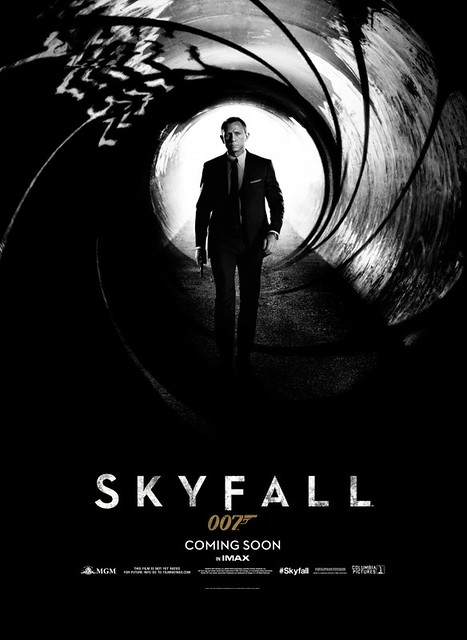
Let us suppose that James Bond is the Church. Not a church, but the Church. And not the book Bond, but the EON films Bond. This British special agent is the capital ‘C’ Church. It’s a reasonable proposition.
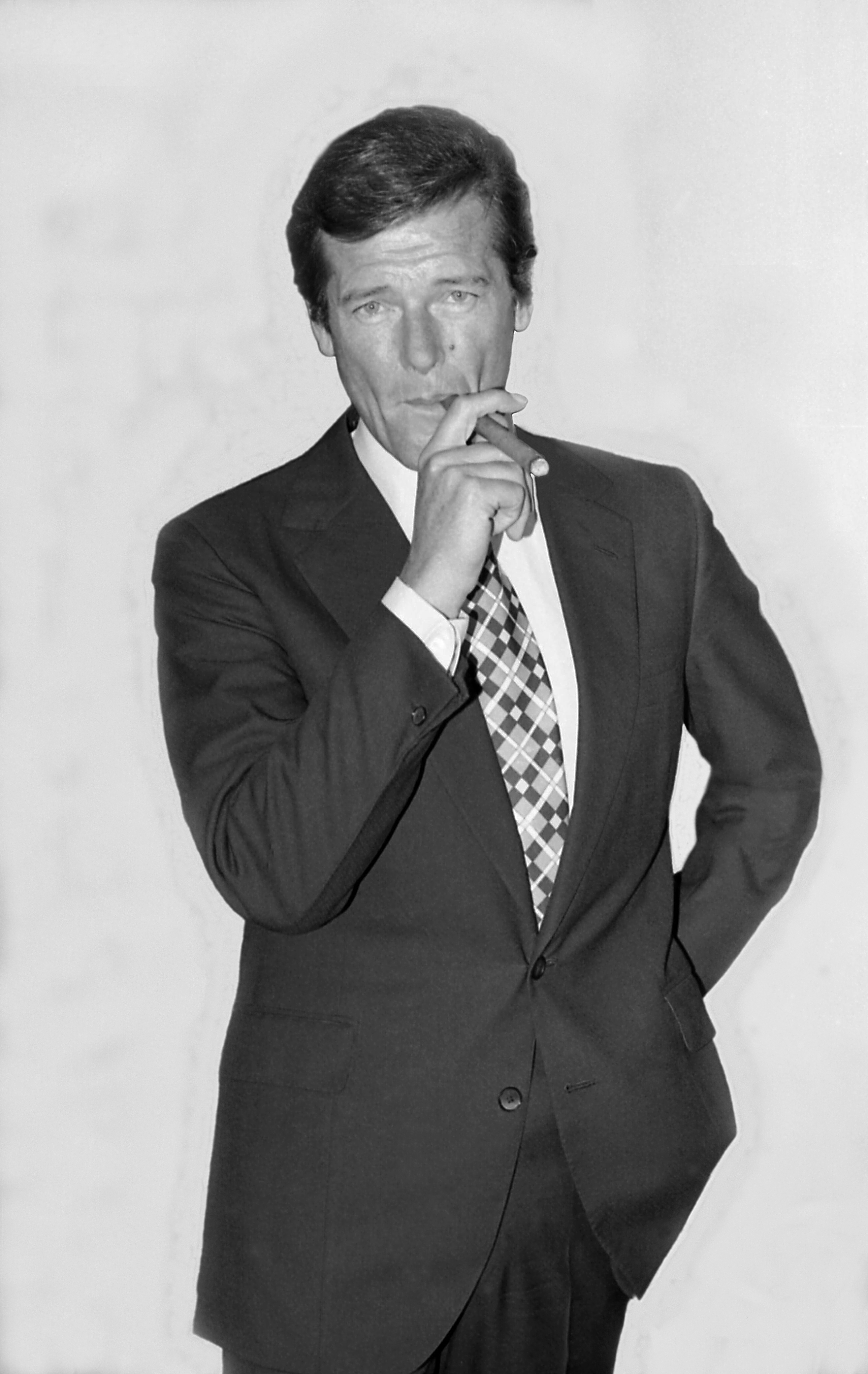
James Bond has been the same secret service agent we have loved and followed across 23 films1 who first busted bad guys and broke hearts in 1962. But in the last 52 years, Bond has been played by 6 different actors (not counting any of the spin-offs, radio shows and other assorted non-canonical media). While we affirm that each new Bond is uniquely himself, there remains a continuity of character that binds them together. They’re one, but also many. Each has his own style and flavor of being 007 (like Sean Connery’s signature accent, or Roger Moore’s ironic eyebrow raise). Each has his own villains to depose, his own beautiful women to disrobe, and his own nifty gadgets with which to disarm or dismember the unwary rapscallion. Despite the unique qualities each actor brings to Bond, the man and the myth are the same, intertwined, inseparable.
 James Bond is the Church. The Church is marked by the unbroken succession of leaders and reformers, picking up doctrine, spinning and stretching the practice, making the tradition its own. Reformers face their own Jaws and Dr No - so-called enemies who stood on the wrong side of doctrine. There have been innovations, like re-translation of the ancient texts in the language of the average reader by Luther and Erasmus. Each new expression picks up the mythos, the history of what it means to be the Church and embodies it in its own distinctive way. There are high-liturgy Byzantine Catholic churches with icons and incense, and no-liturgy Quakers with Spirit-filled silence. There are shouting Pentecostals, and contemplative Trappist monks. There are German Catholics, and Palestinian Lutherans, and Italian Methodists. Each of these expressions brings their unique flavor into the single, universal body of Christ. Diverse but the same. Linked by continuity. Just like James Bond2.
James Bond is the Church. No matter how much you love Sean Connery or Pierce Bronson, Bond isn’t defined by a single actor, just as the Church is not defined by a single theologian, practice, or liturgical style. Just as 007 is reinvented to meet the changing landscape of international counter-terrorism, the Church grows and shifts to be present to the changing, ever-expanding body of Christ. And, just like James Bond is linked in continuity by a familiar cast of characters – like M, Q, and Ms. Moneypenny – so too is the Church bound together with each historical expression of faith in Christ and baptism into his universal body.
James Bond is the Church. The Church is marked by the unbroken succession of leaders and reformers, picking up doctrine, spinning and stretching the practice, making the tradition its own. Reformers face their own Jaws and Dr No - so-called enemies who stood on the wrong side of doctrine. There have been innovations, like re-translation of the ancient texts in the language of the average reader by Luther and Erasmus. Each new expression picks up the mythos, the history of what it means to be the Church and embodies it in its own distinctive way. There are high-liturgy Byzantine Catholic churches with icons and incense, and no-liturgy Quakers with Spirit-filled silence. There are shouting Pentecostals, and contemplative Trappist monks. There are German Catholics, and Palestinian Lutherans, and Italian Methodists. Each of these expressions brings their unique flavor into the single, universal body of Christ. Diverse but the same. Linked by continuity. Just like James Bond2.
James Bond is the Church. No matter how much you love Sean Connery or Pierce Bronson, Bond isn’t defined by a single actor, just as the Church is not defined by a single theologian, practice, or liturgical style. Just as 007 is reinvented to meet the changing landscape of international counter-terrorism, the Church grows and shifts to be present to the changing, ever-expanding body of Christ. And, just like James Bond is linked in continuity by a familiar cast of characters – like M, Q, and Ms. Moneypenny – so too is the Church bound together with each historical expression of faith in Christ and baptism into his universal body.
 Maybe George Lazenby wasn’t your favorite Bond, or the doctrine of Mary’s perpetual virginity makes you cringe. The thing about belonging to the on-going story of Bond and the Church is that you can pick up and put down the expressions which don’t speak to you. Perhaps the Daniel Craig Bond is too violent, but there is the sarcastic wit of the Roger Moore Bond. Perhaps the TULIP theology of strict Calvinism feels stifling and exclusivist, but there is the on-going work of sanctification in Wesley’s doctrine. You may hate one film, or one chapter in the long history of the Church, but there are other movies, adaptions, chapters.
The Church is Reformed and always reforming3. We aren’t an unchanging monolith, an ancient institution, withered but stolid after two millennia; instead, the Church is the regenerating, continuous community of the faithful changing as the community changes. Our own familiar cast of characters are found on the pages of Scripture – Mary Magadlene, Mary the mother of Jesus, Paul, Ruth, Abraham and Sarah, Isaiah, Noah – we are linked by the stories of God’s love for God’s people. And new characters emerge as the story continues – Augustine, Aquinas, Julian of Norwich, Teresa of Avilla, Martin Luther, John and Charles Wesley, Dietrich Bonhoeffer, Guillermo Gutierrez, James Cone, Maricella Althas Reed, John Cobb.
We Church leaders would do well to take a page from James Bond’s book. Not the kill-your-enemies-with-flashy-explosions-and-gratuitous-violence page, clearly, but the embrace-of-change-and-reinvention page. James Bond is iconic not because he is the same actor year after year and film after film; he is iconic because he is the same character portrayed by wildly different actors (Timothy Dalton and Daniel Craig, for example). The Church has already regenerated again and again; we should look to the ways we have Reformed in the past and embrace the coming reforms of the future, knowing that even as the actors – or prominent theologians – change, the heart is continuous.
Maybe George Lazenby wasn’t your favorite Bond, or the doctrine of Mary’s perpetual virginity makes you cringe. The thing about belonging to the on-going story of Bond and the Church is that you can pick up and put down the expressions which don’t speak to you. Perhaps the Daniel Craig Bond is too violent, but there is the sarcastic wit of the Roger Moore Bond. Perhaps the TULIP theology of strict Calvinism feels stifling and exclusivist, but there is the on-going work of sanctification in Wesley’s doctrine. You may hate one film, or one chapter in the long history of the Church, but there are other movies, adaptions, chapters.
The Church is Reformed and always reforming3. We aren’t an unchanging monolith, an ancient institution, withered but stolid after two millennia; instead, the Church is the regenerating, continuous community of the faithful changing as the community changes. Our own familiar cast of characters are found on the pages of Scripture – Mary Magadlene, Mary the mother of Jesus, Paul, Ruth, Abraham and Sarah, Isaiah, Noah – we are linked by the stories of God’s love for God’s people. And new characters emerge as the story continues – Augustine, Aquinas, Julian of Norwich, Teresa of Avilla, Martin Luther, John and Charles Wesley, Dietrich Bonhoeffer, Guillermo Gutierrez, James Cone, Maricella Althas Reed, John Cobb.
We Church leaders would do well to take a page from James Bond’s book. Not the kill-your-enemies-with-flashy-explosions-and-gratuitous-violence page, clearly, but the embrace-of-change-and-reinvention page. James Bond is iconic not because he is the same actor year after year and film after film; he is iconic because he is the same character portrayed by wildly different actors (Timothy Dalton and Daniel Craig, for example). The Church has already regenerated again and again; we should look to the ways we have Reformed in the past and embrace the coming reforms of the future, knowing that even as the actors – or prominent theologians – change, the heart is continuous.
1. 25 if you count the 1967 parody Casino Royale and the non-EON film Never Say Never Again.↩
2. The Doctor from Doctor Who is also an excellent example for diverse expression being part of the same body. However, since my last post was on DW, I figured should expand my pop culture universe.↩
3. Reformata semper reformanda – a rallying cry of the Reformation – stands for the doctrine of “The Church reformed and always reforming according to the Word of God and guided by the Holy Spirit.” This Presbyterian thinks it’s a pretty big deal.↩
Laura
Brekke is a woman of many names and many interests. When she is being a
grown up, she directs Religious Diversity as a Catholic university in
California. When she is being an academic, she ponders theological anthropology and popular culture. When she’s being a pastor, she writes a blog
musing about faith, spirituality, and our reluctance to be vulnerable.
And when she is just being herself, she proudly embraced her inner
Whovian fangirl.
You might also like:
by Laura Brekke
A word of preface: this blog contains spoilers about episodes in Season 2 Doctor Who. If you haven’t seen them yet – get thee to a TV and watch first!
Cultures across human history have struggled with the problem of evil. From vindictive gods who must be appeased, to hoards of supernatural demons tempting the unwary away from the righteous path, evil is the topic of much mythical and theological deliberation. The persistence and origin of evil, particularly in the post-Enlightenment era, continues to perplex theologians and philosophers alike. And, so too, the wrestling with this problem of evil continues as well, and is taken up by the science fiction cult phenomenon Doctor Who.
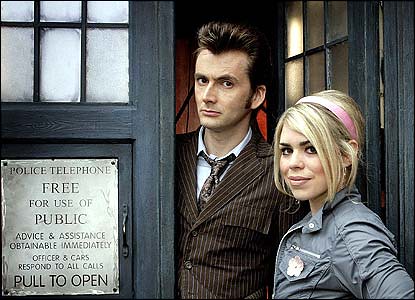
In the pair of episodes from season 2, “The Impossible Planet” and “The Satan Pit,” the Tenth Doctor and his companion Rose, encounter a planet somehow suspended just within the reach of a black hole. A legend tells that this black hole had once swallowed the planet up, but then spit it out again, giving rise to the planet’s name “The Bitter Pill.” Upon this impossible planet, the Doctor and Rose encounter a crew of scientists, drilling to the center and looking for the source of incomparable energy which is radiating out across the universe from the planet’s center and somehow keeping it from being swallowed again1.
After the station is rocked by several earthquakes, the crew is plagued by a series of violent possessions, and the Doctor discovers a malevolent alien chained at the planet’s core. The alien, a great, horned beast chained in a pit of fire, confirms to the Doctor that he is the root of every mythic devil-figure in every culture across the universe. Imprisoned in the planet’s core, the beast uses telepathy to transmit the concept of embodied evil across the stars, possessing crew member Toby in a bid to escape his pre-historic prison. Of course the Doctor, in his brilliant, whimsical way, is able to defeat the alien monster by plunging the planet into the black hole. The Doctor swoops in on the TARDIS just in time to rescue the remaining members of the crew and his beloved companion Rose, before whisking them away from the yawning mouth of the black hole’s abyss. Cue the Doctor Who closing theme.
Well, then. What does this have to say about the problem of evil? Rather a lot, actually.
 For starters, we have to remember that at this point, Russell T Davies was the head writer, and an ardent and vocal atheist. He was clear in several episodes that he was challenging long-accepted religious (particularly Christian) tenets. In “The Satan Pit,” the Doctor gives a monologue in which he asserts that there are no true “gods” as such:
DOCTOR: So that’s the trap. Or the test, or final judgment, I don’t know. But if I kill you, I kill her. Except that implies in this big grand scheme of Gods and Devils that she’s a victim. But I’ve seen a lot of the universe. I’ve seen fake gods and bad gods and demi-gods and would-be gods, and out of all of that whole pantheon, if I believe in one thing, just one thing, I believe in her.
In his monologue, the Doctor declares that there are no true gods – not in the sense of any ultimate Creator or all-knowing deity. There are only false impressions of would-be deity impersonators in a world governed by science. In fact, when the Beast claims to have been imprisoned before the universe began – before time itself – the Doctor rejects his claim for it defies his truth of science and reason. “Is this your religion?” the Beast asks the Doctor, who responds with, “It’s a belief.”
The back and forth between the Beast, the origin of much great evil, and the Doctor, who is characterized by ultimate good (although, those of you who follow the show know that it is a shadowy sort of good, marked by imperfections) asserts 2 points:
1. there are no universal religious truths, insofar as even science can be categorized as religion (there are only beliefs)
2. that evil is real, and the representations of supernatural evil in every mythic incarnation are the result of an ancient alien being chained in the heart of a planet suspended in orbit around a black hole.
There is no intentional “God.” But supernatural evil can be pinned to the first cause, a brutal, power-hungry, violent Satan-like telepathic monster. The show doesn’t posit that all evil is a result of this ancient alien. Episodes like “Rise of the Cybermen” and “Age of Steel” (also Season 2), are parables of how human weakness and greed lead to acts of incomprehensible evil (the slaughter of thousands of innocent victims in order to create an army of Cybermen).
But the show does make the claim that the eerily similar stories of a powerful supernatural evil – an evil which has the power to manipulate individuals into choosing the bad, giving into the pressures of fear, and causing general discord between people – is real and can be attributed to an ancient telepathic beast.
This seems almost laughable. For a show which has gone out of its way to create a god-free universe, to challenge notions of the supernatural, and to dismantle the power of myth, it seems like a weak way-out to simply exchange the idea of a fallen angel for an imprisoned telepathic alien. But precisely because such a show does not turn to “rational science” to explain away evil, we are confronted with just how complex the problem of evil still remains.
For starters, we have to remember that at this point, Russell T Davies was the head writer, and an ardent and vocal atheist. He was clear in several episodes that he was challenging long-accepted religious (particularly Christian) tenets. In “The Satan Pit,” the Doctor gives a monologue in which he asserts that there are no true “gods” as such:
DOCTOR: So that’s the trap. Or the test, or final judgment, I don’t know. But if I kill you, I kill her. Except that implies in this big grand scheme of Gods and Devils that she’s a victim. But I’ve seen a lot of the universe. I’ve seen fake gods and bad gods and demi-gods and would-be gods, and out of all of that whole pantheon, if I believe in one thing, just one thing, I believe in her.
In his monologue, the Doctor declares that there are no true gods – not in the sense of any ultimate Creator or all-knowing deity. There are only false impressions of would-be deity impersonators in a world governed by science. In fact, when the Beast claims to have been imprisoned before the universe began – before time itself – the Doctor rejects his claim for it defies his truth of science and reason. “Is this your religion?” the Beast asks the Doctor, who responds with, “It’s a belief.”
The back and forth between the Beast, the origin of much great evil, and the Doctor, who is characterized by ultimate good (although, those of you who follow the show know that it is a shadowy sort of good, marked by imperfections) asserts 2 points:
1. there are no universal religious truths, insofar as even science can be categorized as religion (there are only beliefs)
2. that evil is real, and the representations of supernatural evil in every mythic incarnation are the result of an ancient alien being chained in the heart of a planet suspended in orbit around a black hole.
There is no intentional “God.” But supernatural evil can be pinned to the first cause, a brutal, power-hungry, violent Satan-like telepathic monster. The show doesn’t posit that all evil is a result of this ancient alien. Episodes like “Rise of the Cybermen” and “Age of Steel” (also Season 2), are parables of how human weakness and greed lead to acts of incomprehensible evil (the slaughter of thousands of innocent victims in order to create an army of Cybermen).
But the show does make the claim that the eerily similar stories of a powerful supernatural evil – an evil which has the power to manipulate individuals into choosing the bad, giving into the pressures of fear, and causing general discord between people – is real and can be attributed to an ancient telepathic beast.
This seems almost laughable. For a show which has gone out of its way to create a god-free universe, to challenge notions of the supernatural, and to dismantle the power of myth, it seems like a weak way-out to simply exchange the idea of a fallen angel for an imprisoned telepathic alien. But precisely because such a show does not turn to “rational science” to explain away evil, we are confronted with just how complex the problem of evil still remains.
 Just as theologians have tried to make sense of how radical evil2 can exist in a world that Christians affirm was created good by a loving God, so too, these non-theist characters are trying to navigate how inexplicable, radical evil can exist in a world governed by science and the triumph of reason. Radical evil just doesn’t compute. St. Augustine believed fully that radical evil was the result of Satan, a fallen angel, who manipulated humans into terrifying acts. Karl Barth argued that evil, real evil, is actually nothingness (das Nichtige) which comes as the result of doing the opposite of God’s will. And, Process Theology wrestles with the theodicy question by limiting God’s power and saying that, “Yes, God is good, but God is not Almighty, and therefore evil is a result of human error without a divine corrective (because correction would be coercion).”
Ultimately, the problem and mystery of evil isn’t adequately explained by philosophers, theologians, or even the good Doctor himself. It’s hard to believe that any human being can become so sin-warped that he would entertain the idea of burning people in ovens; and yet, we are nevertheless faced with the grotesque horrors of the Holocaust. People report demon possession every year, and it manifests in ways which science can’t always ascribe to recorded forms of mental illness. We have biological fears of the dark; and we have biological fears, in many ways, of ourselves, fears which can be manipulated and result in great harm.
The problem of evil – of radical inexplicable evil – is a perennial one. By attributing supernatural evil (or influence to choose evil) to a prehistoric, telepathic alien monster imprisoned within a planet suspended in orbit around a black hole at the far reaches of the universe, Doctor Who is saying (like most theologians have said): we don’t really know. Why not an ancient telepathic alien? It makes as much sense as a fallen angel (which is to say, none).
Radical evil is precisely non-sensible. It doesn’t make sense. And while we try to wrestle with it, to find its’ first cause instead of just living with its unholy effects, we are left with philosophical wanking, and ancient myth. Truthfully, no one really knows where and why there is radical evil. But one thing is certain, it exists – even the Doctor accepts the fact that it exists. What becomes the issue worth spending a lifetime unpacking is this: what will we do, you and I, in the face of it?
Just as theologians have tried to make sense of how radical evil2 can exist in a world that Christians affirm was created good by a loving God, so too, these non-theist characters are trying to navigate how inexplicable, radical evil can exist in a world governed by science and the triumph of reason. Radical evil just doesn’t compute. St. Augustine believed fully that radical evil was the result of Satan, a fallen angel, who manipulated humans into terrifying acts. Karl Barth argued that evil, real evil, is actually nothingness (das Nichtige) which comes as the result of doing the opposite of God’s will. And, Process Theology wrestles with the theodicy question by limiting God’s power and saying that, “Yes, God is good, but God is not Almighty, and therefore evil is a result of human error without a divine corrective (because correction would be coercion).”
Ultimately, the problem and mystery of evil isn’t adequately explained by philosophers, theologians, or even the good Doctor himself. It’s hard to believe that any human being can become so sin-warped that he would entertain the idea of burning people in ovens; and yet, we are nevertheless faced with the grotesque horrors of the Holocaust. People report demon possession every year, and it manifests in ways which science can’t always ascribe to recorded forms of mental illness. We have biological fears of the dark; and we have biological fears, in many ways, of ourselves, fears which can be manipulated and result in great harm.
The problem of evil – of radical inexplicable evil – is a perennial one. By attributing supernatural evil (or influence to choose evil) to a prehistoric, telepathic alien monster imprisoned within a planet suspended in orbit around a black hole at the far reaches of the universe, Doctor Who is saying (like most theologians have said): we don’t really know. Why not an ancient telepathic alien? It makes as much sense as a fallen angel (which is to say, none).
Radical evil is precisely non-sensible. It doesn’t make sense. And while we try to wrestle with it, to find its’ first cause instead of just living with its unholy effects, we are left with philosophical wanking, and ancient myth. Truthfully, no one really knows where and why there is radical evil. But one thing is certain, it exists – even the Doctor accepts the fact that it exists. What becomes the issue worth spending a lifetime unpacking is this: what will we do, you and I, in the face of it?
1. I want to say that the curiosity of the human scientists is, in itself, worth discussing. But, that would be a digression from the topic of evil, so I’ll save it for another day!↩
2. I am making the distinction between “natural evil” – like a monsoon or cancer, which is the unfortunate result of a natural process – and “moral evil” – the evil as a result of human choices. When I say “radical evil” I am talking about the seemingly inhuman ways in which human beings create/perpetuate evil. The horrors of the Holocaust, or the Cambodia Killing fields are two examples of radical evil.↩
Laura Brekke is a woman of many names and many interests. When she is being a grown up, she directs Religious Diversity as a Catholic university in California. When she is being an academic, she ponders theological anthropology and popular culture. When she’s being a pastor, she writes a blog musing about faith, spirituality, and our reluctance to be vulnerable. And when she is just being herself, she proudly embraced her inner Whovian fangirl.
You might also like: